• 6604cbd371a4449819
  • 6604cbd419bc838451
  • 6604cbd49542673381
  • 6604cbd51ce2b59534
  • 6604cbd59973f46036
Inquiry
Form loading...

What Is an Olympic Standard Table Tennis Ball?

What makes Olympic Standard Table Tennis Balls different from ordinary practice balls? The answer begins with precision, not branding. The International Table Tennis Federation (ITTF) Equipment Regulations specify a 40-millimetre diameter, 2.7-gram weight, spherical shape, and matte white or orange finish. Approved balls must also pass demanding tests for hardness, roundness, bounce, and weight consistency.

The phrase “Olympic standard” can be misleading. The Olympics do not create a separate ball category. Instead, Olympic competition uses balls approved under ITTF regulations and selected through official event procedures. ITTF’s Equipment Regulations remain the primary technical authority. Market research from Grand View Research also identifies durability, consistency, and professional certification as major purchasing factors in the global table tennis equipment market. However, market reports often combine tables, bats, nets, and balls. Their ball-specific conclusions should be read carefully.

Thomas Weikert, former ITTF President, has emphasized that equipment standards “protect the integrity of competition.” That principle explains why a tiny variation matters. A ball that feels slightly heavier can change timing, spin, and defensive control. Players notice it at the table. Spectators may not.

There is no perfect ball.

Even ITTF-approved products can feel different because of manufacturing tolerances, storage temperature, humidity, and table conditions. A reliable evaluation should check bounce height, seam quality, roundness, and performance after repeated rallies. Official approval is essential, but personal testing still matters. This guide examines those details, helping readers distinguish genuine Olympic-level specifications from vague advertising claims.
What Is an Olympic Standard Table Tennis Ball?

Definition and Purpose of an Olympic Standard Table Tennis Ball

What Is an Olympic Standard Table Tennis Ball?

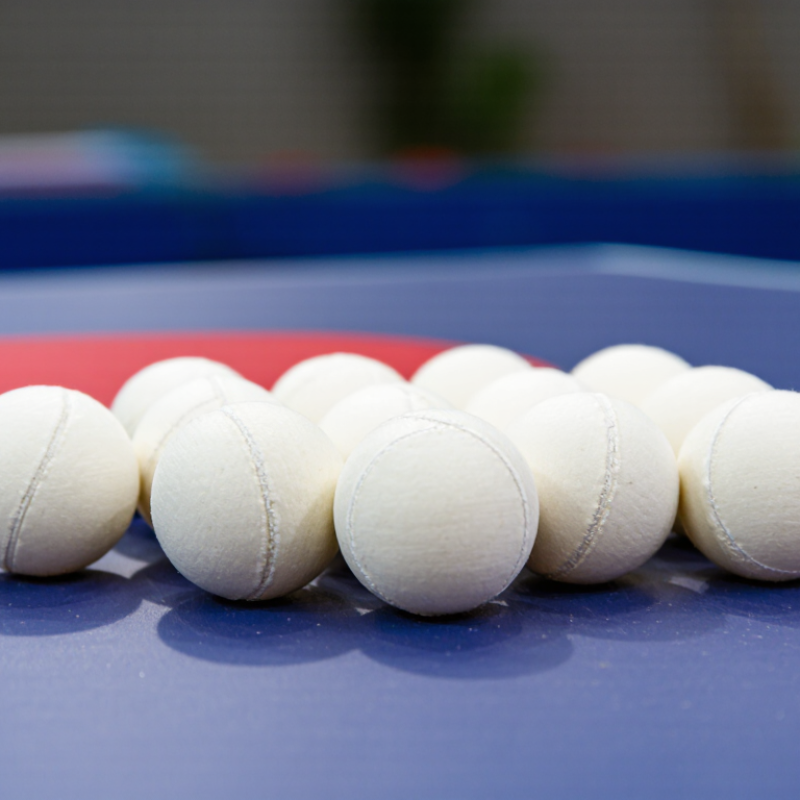
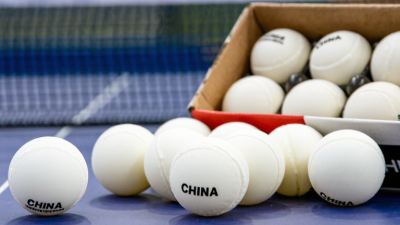
An Olympic standard table tennis ball is a competition ball that meets the technical requirements used in elite play. The phrase does not describe a separate Olympic-only design. Instead, it usually means a ball approved under international table tennis regulations. It is normally 40 millimeters wide and weighs about 2.7 grams. The ball must be spherical, consistent, and made from approved plastic material. Its bounce and color also require careful control.

The purpose is simple: create fair, repeatable conditions for every athlete. A reliable ball should travel predictably after contact with the racket. Its surface affects spin, speed, and visibility under bright arena lights. Even a small difference in roundness can change a short serve or a fast counterattack. Official testing checks size, weight, bounce, and visual quality. Rules may change, so event regulations remain the safest reference. Calling any 40-millimeter ball “Olympic standard” can be misleading.

Tips: Hold the ball under clear light and inspect its surface. Rotate it slowly between your fingers. Look for dents, seams, or uneven coloring. Test its bounce on a firm table from a consistent height. Replace damaged balls before serious practice. A ball can look acceptable yet feel unstable during heavy topspin. My own practical caution is simple: do not judge quality from packaging alone. Repeated testing is better, although even careful players sometimes miss a slight distortion.

What Is an Olympic Standard Table Tennis Ball? - Definition and Purpose of an Olympic Standard Table Tennis Ball

Data Dimension Olympic Standard Requirement or Description Purpose in Olympic Table Tennis
Definition A table tennis ball used in Olympic competition that meets the technical requirements established under the international laws of table tennis. Creates consistent playing conditions for athletes, officials, broadcasters, and spectators.
Shape Spherical, with a uniform and symmetrical form. Supports predictable flight, bounce, spin, and contact with the racket and table.
Diameter 40.0 mm nominal diameter, with an allowable range of approximately 39.5–40.5 mm. Maintains a standardized aerodynamic profile and visual scale during play.
Mass 2.7 g nominal mass, with an allowable range of approximately 2.67–2.73 g. Helps produce consistent speed, trajectory, spin response, and reaction time.
Material Made from celluloid or another approved plastic material that meets the applicable technical requirements. Provides the required combination of durability, elasticity, weight, and playing response.
Color White or orange, with a uniform and clearly visible appearance. Improves visibility against different table, venue, lighting, and broadcast backgrounds.
Surface Finish Matt rather than glossy. Reduces glare and helps players track the ball more reliably under intense lighting.
Bounce Performance When dropped from about 305 mm onto a standardized steel block, the ball should rebound approximately 240–260 mm. Ensures a controlled and repeatable bounce during serves, rallies, and defensive shots.
Uniformity The ball must have consistent roundness, weight, size, color, and rebound characteristics. Prevents equipment variation from influencing the result of a match.
Approval Status Olympic competition balls must satisfy the applicable international technical specifications and event approval procedures. Confirms that the equipment is suitable for regulated elite-level competition.
Olympic-Specific Difference There is no fundamentally different Olympic ball size; the term generally refers to a ball compliant with the rules used for Olympic competition. Clarifies that Olympic status relates primarily to compliance, testing, and event selection rather than a unique physical design.
Match Importance The ball is used in singles and doubles matches under the same standardized playing laws. Allows results to reflect athletic skill, tactics, technique, and decision-making rather than inconsistent equipment.

Note: Technical tolerances and approval procedures are based on the international laws and equipment specifications governing elite table tennis competition.
Required Size, Weight, and Spherical Shape

What Is an Olympic Standard Table Tennis Ball?

Required Size, Weight, and Spherical Shape

An Olympic table tennis ball is not a special Olympic-only design. It follows international competition regulations. The required diameter is 40 millimeters. Its weight must be 2.7 grams. These measurements affect speed, bounce, and control.

The ball must be spherical. Its surface should be matte, not glossy, to reduce distracting reflections under bright arena lights. Approved balls are usually white or orange. A properly shaped ball travels more predictably after striking the table or racket. Even a small uneven area can create an unexpected curve.

Practical checks can help. Place the ball on a precise digital scale. A ruler or caliper can estimate its diameter. Roll it across a flat table and watch for wobbling. Listen for a clear, consistent bounce. These tests are useful, but home equipment is imperfect. Temperature and humidity may also affect the ball’s response. A ball that feels acceptable during practice may still fail formal inspection. Official events rely on certified equipment and current technical requirements, not casual judgment. Players should check the event handbook because regulations can be updated. The difference may seem tiny. It can still change a close rally.

Materials, Color, and Surface Finish

An Olympic-standard table tennis ball is usually made from durable plastic, not celluloid. The material must remain stable during fast rallies, repeated impacts, and changes in room temperature. Modern competition balls are commonly 40+ millimeters wide and weigh about 2.7 grams. Small differences matter. A slightly heavy ball may feel slower and less lively.

Color is carefully controlled for visibility. White and orange are the accepted competition colors, chosen against green, blue, or dark table surfaces. The shade should remain clear under strong arena lighting. A bright ball is not always easier to see. Reflections, camera flashes, and background colors can reduce contrast. This is where personal testing still matters.

The surface finish should be matte or low-gloss. It helps players track rotation without distracting glare. A smooth, even surface also supports predictable contact with the racket. Seams should be clean and consistent, with no visible ridges or soft spots. I have found that two balls with similar measurements can still feel different during serves. That may come from tiny changes in roundness or plastic texture. It is worth checking several balls before serious practice. Perfect consistency is difficult, even when the printed specifications look identical.

What Is an Olympic Standard Table Tennis Ball?

Materials, color, and surface finish based on current international competition specifications

Material

Celluloid-free plastic is used for modern competition balls.

Permitted Colors

The ball may be white or orange, with a uniform shade.

Surface Finish

The surface must be matt to reduce glare during play.

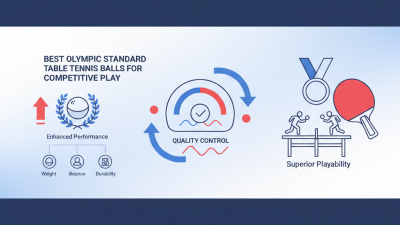
An Olympic-standard table tennis ball follows international specifications: a diameter of 40 mm, a mass of 2.7 g, a spherical shape, a matt surface, and a white or orange color. The two numerical requirements are shown with separate axes because they use different units.

Bounce, Roundness, and Performance Standards

What Is an Olympic Standard Table Tennis Ball?

An Olympic-standard table tennis ball must meet strict bounce, roundness, and performance requirements. The International Table Tennis Federation’s Technical Leaflet T3 specifies a diameter of 40 millimetres and a mass of 2.7 grams. Its permitted weight tolerance is narrow. The ball must also be spherical, with consistent outer surfaces. A small shape error can change its flight.

Bounce is measured under controlled conditions. According to the ITTF specification, a ball dropped from 30.5 centimetres onto a standard steel block should rebound between 24 and 26 centimetres. This test sounds simple. It is not. Temperature, surface condition, and release technique can influence the result. In real training, players notice these differences through slower arcs, uneven topspin, or a softer sound.

Tips: Test several balls on the same table. Use a ruler and a consistent drop height. Roll each ball across a flat surface to reveal wobble. Check it under bright light for dents or rough patches. The ITTF Handbook also requires an evenly matt white or orange appearance for regulated play. A ball can pass one bounce test and still feel wrong during rallies. That is where practical experience matters. I would not treat a single measurement as absolute proof. Repeating the test gives a more dependable picture.

Testing and Approval for Olympic Competition

An Olympic-standard table tennis ball is not approved by appearance alone. It must pass controlled testing before Olympic competition. Under the ITTF Handbook and Technical Leaflet T3, the ball must measure at least 40 millimetres in diameter and weigh 2.7 grams, with a permitted tolerance of 0.5 grams. Its shape must remain nearly spherical, with a maximum circularity deviation of 0.25 millimetres.

Testing is highly practical. A sample is dropped from 305 millimetres onto a standard steel block. The rebound must reach 240 to 260 millimetres, according to ITTF equipment regulations. Testers also check hardness, surface finish, color, and visible defects. The ball should have a uniform matte surface, so lighting does not create distracting glare during fast rallies. Olympic organizers select equipment from the approved list, but approval does not mean every ball feels identical.

Small differences still matter. A ball can meet the rebound range yet feel slightly faster after repeated impacts. Temperature, humidity, and court lighting may also influence player perception. That is where testing becomes less perfect. Laboratory numbers create consistency, but experienced officials still inspect samples and monitor performance before play. I would not treat the specification as an absolute guarantee. It is a disciplined baseline, supported by measurable evidence.

Sources: ITTF Handbook; ITTF Technical Leaflet T3, Technical Requirements for Balls.