• 6604cbd371a4449819
  • 6604cbd419bc838451
  • 6604cbd49542673381
  • 6604cbd51ce2b59534
  • 6604cbd59973f46036
Inquiry
Form loading...

China Top App Controlled Table Tennis Robot Suppliers?

Choosing a supplier for an App-Controlled Table Tennis Robot involves more than comparing prices or app screenshots. Buyers should check how the robot handles drills, spin settings, ball frequency, and placement. A useful app should make adjustments clear, not hide basic controls behind confusing menus. Setup matters too. Can one person assemble the machine and connect it to a phone without lengthy troubleshooting?

China has a broad manufacturing base for table tennis equipment, but suppliers can differ in engineering support, production capacity, and customization options. Product listings alone rarely show how a robot performs during repeated practice. Ask for current specifications, operating videos, warranty terms, and details about replacement parts. If possible, request a sample or arrange a live demonstration. Small details count: the stability of the ball feeder, the accuracy of placement, and how easily settings can be saved between sessions.

This guide outlines practical ways to assess China-based suppliers and compare their app-controlled models. It focuses on product capability, communication, quality checks, and after-sales support rather than unverified rankings. No single supplier is right for every buyer. A club may value durable construction, while a home player may prefer quick setup and compact storage. There is a catch: advertised features can sound similar, yet real-world performance may differ. Verify the details before making a decision.
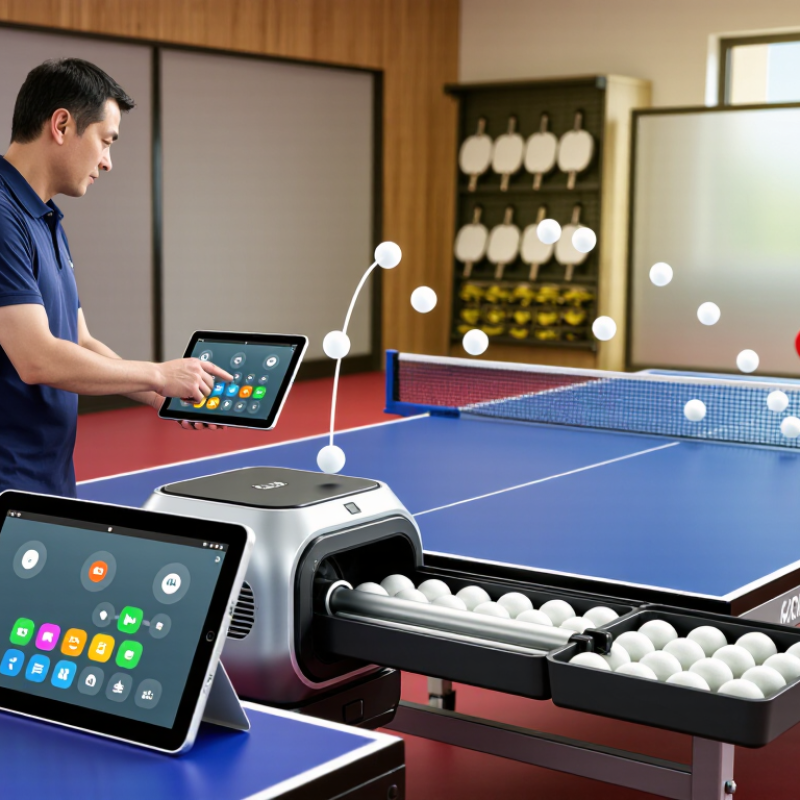
China Top App Controlled Table Tennis Robot Suppliers?

Understanding App-Controlled Table Tennis Robots and Their Features

App-controlled table tennis robots pair a ball-feeding machine with a phone or tablet interface. Players can usually adjust feed rate, ball speed, spin, and placement without reaching for the machine. Some apps offer preset drills, while others let users build sequences for forehand topspin, backhand blocks, or footwork. Features vary, so check which settings work during live play and which require the robot to pause.

A useful app should make adjustments clear and repeatable. For example, a player might set a moderate feed rate, alternate balls between two marked spots, then increase the pace gradually. Small adjustments matter. A stable connection and readable controls help during practice, especially when the screen is across the room. Still, app data may not reflect the actual ball placement perfectly; table position, setup, and ball condition can change the result. Setup can feel fiddly at first, and a preset drill may not match every player’s timing. Treat the app as a practice aid, not a replacement for coaching or careful observation.
How App-Based Training and Ball-Delivery Systems Work

App-based training turns a table tennis robot into a programmable practice partner. Players select feed intervals, speed, spin, and placement from a phone, then save drills for later sessions. A typical setup pairs the app with the robot over a wireless connection. The app sends settings to a controller, which adjusts the feeder wheels and aiming mechanism. Short feeds help warm-ups. Wider placement tests footwork.

Ball delivery depends on consistent mechanics. A hopper guides balls into rotating wheels or a firing wheel, while a movable head changes direction. The ITTF’s technical rules specify a 40 mm ball weighing 2.7 grams, useful reference points when checking feeder compatibility and repeatability. In practice, ball quality and hopper fill level can still affect delivery. Small variations matter.

Good systems report feed rate and allow gradual adjustments, rather than offering only dramatic speed presets. A player might begin with a slow, fixed forehand feed, then add topspin and alternating placement. The weak point is often setup, not software. A slightly tilted robot can send balls toward the net, even when the saved drill looks correct. Apps also cannot judge whether a player’s movement is sound. Coaches should verify settings in person and treat performance statistics as practice records, not proof of improvement.

Criteria for Evaluating Chinese Table Tennis Robot Suppliers

When evaluating Chinese suppliers of app-controlled table tennis robots, request repeatable test results, not just polished demonstrations. The ITTF specifies a 40 mm ball and a table measuring 2.74 by 1.525 metres. Ask suppliers to test serves across those dimensions, recording speed, spin, placement consistency, and ball-feed interruptions. A useful trial includes both forehand and backhand drills, plus a full basket of balls. Watch the app, too: Can players adjust frequency and placement without losing connection? A polished demo can still mislead.

Manufacturing capability matters, but so does support after delivery. The International Federation of Robotics reported 541,302 industrial robot installations worldwide in 2023 in its World Robotics 2024 report. That figure describes industrial automation broadly, not table tennis equipment; it is a reminder to verify production controls rather than assume them. Request documented inspection procedures, component traceability, spare-parts lead times, and warranty terms. Ask for a sample unit and run repeated sessions in your own training space. Measure feed accuracy and app response after warm-up, not only at startup. Small inconsistencies matter. Supplier documents may look complete, yet practical tests can expose gaps. Record what fails, and ask how the supplier will correct it.

Criteria for Evaluating Chinese Table Tennis Robot Suppliers

Suggested allocation of evaluation weight across practical procurement criteria. These percentages are a planning framework, not measured ratings of any supplier.

Assess product quality and reliability, customization options, technical capability, after-sales support, production capacity, compliance documentation, and total cost. Adjust the weights to match your project requirements.

Profiles of Leading Chinese App-Controlled Robot Suppliers

China’s app-controlled table tennis robot suppliers vary in engineering focus and production capabilities. Some emphasize compact machines for home practice, while others build heavier units for clubs and training rooms. A supplier profile should explain more than the product range. It should describe feed consistency, spin options, placement control, and how easily players can adjust drills in the app.

Look closely at the physical details. Check whether the ball outlet stays aligned during rapid oscillation, and ask how often feed wheels need replacement. Request a live app demonstration, not just screenshots. Useful questions include whether the software supports common mobile systems, saves custom drills, and receives firmware updates. Small details matter. A menu that freezes mid-session can disrupt practice, even when the robot itself performs well.

Export experience, clear manuals, spare-part access, and responsive technical support help distinguish suppliers with dependable operations. Ask for test videos showing repeated feeds at different speeds, plus written specifications and warranty terms. Some suppliers may offer customization, but a custom interface or language option can add time and cost. No profile tells the whole story; verify performance with a sample unit before placing a large order.

China Top App-Controlled Table Tennis Robot Suppliers? - Profiles of Leading Chinese App-Controlled Robot Suppliers
Supplier Profile Typical Product Focus App-Control Considerations Customization to Ask About Export and Verification Checks
App-focused OEM/ODM supplier Table tennis robots developed for app-based training and consumer use. Specific models and production capabilities vary by supplier. Confirm supported phone operating systems, connection method, app languages, software updates, and whether the robot can also be operated without the app. Ask whether the supplier supports custom app branding, user-interface languages, training drills, and packaging. Confirm development costs and minimum order quantities in writing. Request product samples, app demonstrations, technical documents, and a written warranty. Verify that the app is available in the intended sales markets.
Table tennis equipment manufacturer Supplier focused on table tennis equipment, potentially including robots alongside nets, tables, or training accessories. The actual product range must be checked with each supplier. Check whether app control is built into the offered model or provided through a separate controller or accessory. Ask for a live demonstration of settings and drills. Confirm options for ball feed, oscillation, spin, placement, and training programs model by model; do not assume every feature is available on every unit. Check spare-parts availability, user manuals, electrical specifications, packaging dimensions, and shipment terms before placing an order.
Export-oriented sporting-goods supplier Supplier that may coordinate product sourcing, export documentation, packaging, and shipping. It may manufacture products directly or source them from another factory. Identify who maintains the app and handles technical support. Ask whether app access, cloud services, or account registration are required for normal operation. Confirm branding, labels, manuals, carton design, and available product configurations, including any limits imposed by the original manufacturer. Ask for the factory identity, product test reports where applicable, and clear confirmation of the party responsible for warranty service and replacement parts.
General product checks for all profiles App-controlled table tennis robots differ by model; supplier descriptions alone are not sufficient to compare performance. Test connection stability, control responsiveness, supported devices, and operation in the intended market before committing to a large order. Compare verified specifications such as ball capacity, feed rate, adjustable settings, power supply, and included accessories using the same criteria for each model. This table describes supplier categories and due-diligence points, not verified company-specific profiles. Confirm all specifications, certifications, prices, and production claims directly with the supplier.

Supplier Verification, Customization, and Purchasing Considerations

China Top App Controlled Table Tennis Robot Suppliers?

Supplier Verification, Customization, and Purchasing Considerations

Choosing an app-controlled table tennis robot supplier takes more than comparing speed claims. Ask for a live demonstration using the control app and the exact robot configuration you plan to buy. Check whether settings are easy to adjust, and whether the robot repeats placements consistently across several minutes of play. Small details matter. Request a written specification covering spin types, ball capacity, power requirements, warranty terms, and spare-part availability. A polished demo can still hide awkward setup or unstable app connections.

Tips: Test the app on a real phone, not only in a sales video. Ask how software updates and technical support are handled. Keep the answers in writing.

Customization should fit your training space and skill level. Discuss placement range, programmable drills, mounting or storage needs, and compatibility with your table before paying a deposit. Request a sample drill plan or a clear explanation of how users create and save routines. For larger orders, confirm production timelines, packaging, inspection steps, and what happens if delivered units differ from the approved sample. Be specific. Supplier discussions can overlook small requirements, and those oversights may become costly. Compare total landed costs, not just the quoted unit price, and leave time to test a unit before committing to a larger purchase.