• 6604cbd371a4449819
  • 6604cbd419bc838451
  • 6604cbd49542673381
  • 6604cbd51ce2b59534
  • 6604cbd59973f46036
Inquiry
Form loading...

Why Is a Commercial Ping Pong Robot So Durable?

Why do some commercial ping pong robots remain reliable after thousands of training sessions? The answer involves more than a powerful motor. A durable design combines strong materials, stable construction, careful maintenance, and thoughtful engineering.

When buyers search for “Commercial Ping Pong Robot Durable,” they usually want dependable performance in busy training rooms. Coaches expect consistent ball speed, accurate placement, and simple controls. Players also notice small details. A loose wheel, overheated motor, or cracked ball container can interrupt practice quickly. Commercial models often use reinforced housings, protected internal parts, and high-quality feeding mechanisms. These features help the robot handle repeated operation, transport, and accidental contact.

Durability is not unlimited.

A reliable robot still needs inspection and cleaning. Dust can affect moving parts. Moisture may damage electronic components. Incorrect ball sizes can create unnecessary stress inside the feeder. In real facilities, users may also overload the machine or ignore unusual sounds. That behavior can reduce service life, even with excellent manufacturing. Therefore, a fair evaluation should examine construction quality, heat management, replacement-part access, and warranty support. Independent testing and manufacturer specifications provide useful evidence, but neither replaces daily observation. The best conclusion comes from combining technical data with practical experience. A commercial ping pong robot becomes truly durable when its engineering supports real users, repeated training, and imperfect operating conditions. That balance matters more than impressive marketing claims.
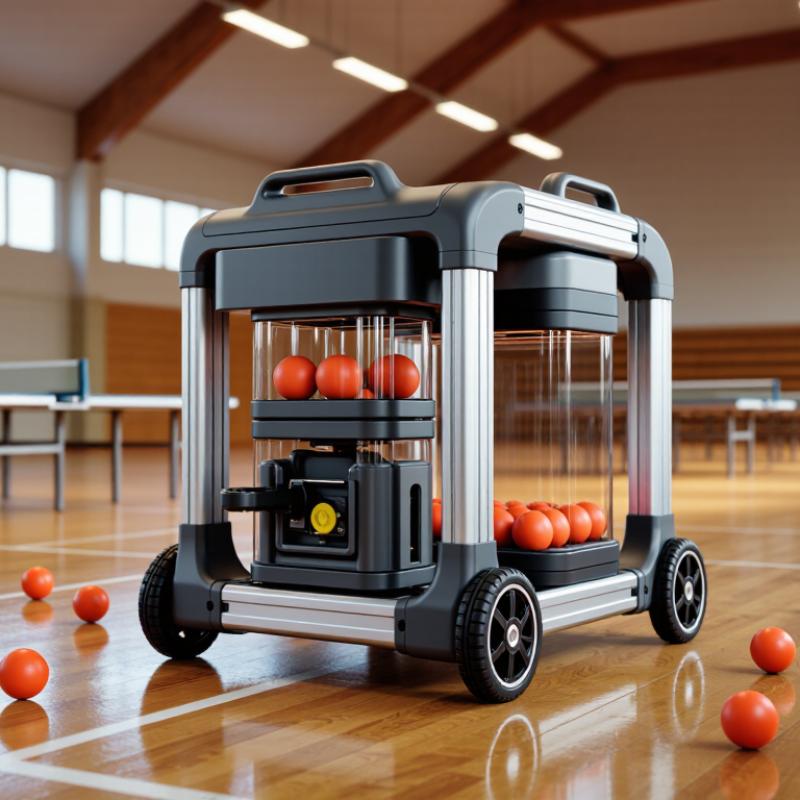
Why Is a Commercial Ping Pong Robot So Durable?

Commercial Ping Pong Robots: Definition and Core Functions

Why Is a Commercial Ping Pong Robot So Durable?

Commercial Ping Pong Robots: Definition and Core Functions

A commercial ping pong robot is an automated training device built for repeated table tennis practice. It feeds balls at adjustable speeds, angles, frequencies, and trajectories. Unlike casual home models, it must support many users during busy training sessions. Its core functions include serving drills, multi-point placement, topspin, backspin, and random variation. Some systems also collect balls automatically, reducing interruptions between exercises.

Durability comes from practical engineering, not appearance alone. A reinforced frame helps absorb vibration from high-speed ball delivery. Protected motors handle repeated starts and stops with less stress. Smooth feed wheels reduce ball jams and uneven launches. In a training hall, dust, sweat, and hundreds of impacts can expose weak parts quickly. Regular cleaning still matters. No machine is flawless.

A reliable unit should offer stable output after long operation, simple controls, and accessible maintenance points. Coaches often test consistency by checking ten consecutive shots at the same setting. Large differences may indicate worn wheels, loose parts, or poor calibration. Safety also matters, especially when several players share one space. A guarded ball outlet, secure base, and clear operating instructions reduce avoidable risks. Commercial robots are durable when their design matches real training demands, though users sometimes expect maintenance-free performance. That expectation needs reconsideration.

Why Is a Commercial Ping Pong Robot So Durable? - Commercial Ping Pong Robots: Definition and Core Functions

Typical characteristics of commercial-grade table-tennis robots; specifications vary by model and operating environment.
System Dimension Typical Commercial Configuration Core Function Durability Contribution
Structural frame Powder-coated steel or reinforced aluminum housing Supports the ball-delivery, control, and collection assemblies Resists repeated vibration, impacts, and deformation during frequent use
Ball-delivery mechanism Two-wheel or multi-wheel launching system with adjustable wheel speed Generates topspin, backspin, sidespin, and varied ball speed Dedicated motors and replaceable contact wheels reduce stress on a single drive component
Ball capacity Commonly about 100–200 standard 40+ mm plastic balls, depending on hopper design Enables extended drills with fewer interruptions for reloading A reinforced hopper and guided feed path help prevent jams and uneven loading
Ball-feeding control Electronic or mechanical feed control with selectable intervals Controls repetition rate and supports regular or programmed drills Controlled feeding limits sudden loads on the launcher and reduces misfeeds
Oscillation system Motorized horizontal sweep; some systems also provide vertical angle adjustment Distributes balls across different areas of the table Metal gears, protected linkages, and stable mounting reduce wear from continuous movement
Speed and spin adjustment Independent adjustment of launch speed, wheel differential, and trajectory Produces beginner, intermediate, and advanced training patterns Balanced settings reduce excessive motor strain and premature wheel wear
Operating cycle Designed for repeated training sessions rather than occasional household use Supports coaching programs, clubs, schools, and shared practice areas Higher-duty motors, cooling space, and serviceable parts are better suited to frequent operation
Mobility and storage Integrated wheels, folding components, or detachable collection assemblies Allows the robot to be moved, positioned, and stored efficiently Reinforced casters, locking mechanisms, and protected joints withstand repeated relocation
Electrical protection Insulated wiring, enclosed control boards, thermal protection, and regulated power input Powers motors and control functions safely and consistently Helps protect components from overheating, accidental contact, and unstable operating conditions
Maintenance design Accessible feed channels, removable covers, cleanable wheels, and replaceable wear parts Simplifies cleaning, inspection, adjustment, and repair Routine removal of dust and ball residue helps preserve feed accuracy and motor performance
Safety controls Emergency stop, guarded moving parts, stable base, and controlled startup Reduces risk during operation, training changes, and maintenance Prevents sudden launches and mechanical damage caused by unsafe handling or blocked mechanisms

Key Materials Used in Commercial Ping Pong Robot Construction

Why Is a Commercial Ping Pong Robot So Durable?

Key Materials Used in Commercial Ping Pong Robot Construction

A commercial ping pong robot faces repeated impacts, vibration, dust, and long operating hours. Its durability starts with a carefully selected outer shell. Many designs use impact-resistant ABS or polycarbonate plastic. These materials stay relatively light while resisting cracks from accidental contact. Rounded edges also reduce stress around corners.

The internal frame often uses aluminum alloy or treated steel. Aluminum lowers weight and resists corrosion, while steel supports heavier motors and ball-feeding parts. Stainless steel screws and shafts are useful near humid training areas. They help prevent rust around moving joints. However, metal alone cannot guarantee reliability. Poor alignment can damage strong parts quickly.

Engineers also rely on sealed bearings, reinforced rubber wheels, and flexible vibration mounts. Rubber wheels grip each ball without crushing its surface. Sealed bearings keep dust away from rotating components. Some circuit boards receive protective coatings against moisture and fine particles. This detail is easy to overlook. In real sports facilities, spilled drinks and careless storage still create problems.

Durability testing usually includes repeated feeding cycles, impact checks, and temperature changes. Yet laboratory testing cannot copy every busy training room. A robot may survive thousands of launches but suffer from one loose screw. Regular cleaning, wheel inspection, and proper storage remain essential. The design is durable, not indestructible.

How the Drive, Feed, and Ball-Collection Systems Withstand Use

Why Is a Commercial Ping Pong Robot So Durable?

How the Drive, Feed, and Ball-Collection Systems Withstand Use

A commercial ping pong robot survives through controlled stress, not oversized parts. Its drive system uses balanced motors, protected bearings, and rigid mounts. These parts reduce vibration during repeated angle changes. Stable torque supports long training cycles. Heat matters too. Ventilation and current protection limit electrical damage. A weak mount can still shorten service life.

The feed system faces constant friction. Rollers must grip balls without damaging their surfaces. The ITTF Technical Leaflet T3 specifies a ball mass of 2.7 grams and a diameter above 40 millimeters. These limits help engineers set roller gaps and motor speeds accurately. However, dust, humidity, and worn balls change friction. Adjustable pressure helps. Accessible cleaning points matter more than many buyers expect.

The collection system absorbs repeated impacts. A sloped hopper guides balls toward the feeder, while rounded edges reduce snagging. Replaceable contact surfaces can limit abrasion and noise. Grand View Research’s 2024 table-tennis equipment report places the global market in the billion-dollar range and forecasts growth through 2030. That market data suggests sustained demand, not guaranteed durability. Field use remains harsher than laboratory testing. A neglected hopper can still jam after thousands of feeds.

Design Features That Improve Durability and Maintenance

Why Is a Commercial Ping Pong Robot So Durable?

Design Features That Improve Durability and Maintenance

A commercial ping pong robot survives heavy use through simple, reinforced construction. Its outer housing should resist impacts from stray balls and frequent handling. A stable metal frame also reduces vibration during high-speed feeding. That matters. Loose vibration can damage gears, sensors, and wiring over time.

The ball delivery system needs careful protection. Sealed bearings help block dust and moisture near moving parts. Strong rollers maintain consistent spin without excessive surface wear. Removable wheel covers make inspections faster. Technicians can check dust buildup, worn rubber, or unusual noise without dismantling the whole unit. Accessible screws and modular parts also reduce repair time. In a busy training facility, that saved time has real value.

Good maintenance design prevents small faults from becoming expensive failures. A clear control panel can show feeding errors, overheating, or sensor problems. Drainage channels may protect internal components after humid storage. However, no machine is maintenance-free. Even a durable robot needs regular cleaning, screw checks, and roller replacement. I have seen designs focus heavily on strength while ignoring access for repairs. That is a weakness. Durability should include easy servicing, not just a tough shell. A few extra minutes spent removing dust may protect the motor from uneven loading and extend its working life.

Testing Standards and Factors Affecting Service Life

Why Is a Commercial Ping Pong Robot So Durable?

Testing Standards and Factors Affecting Service Life

A commercial ping pong robot survives because its weak points are tested early. The ITTF Equipment Committee specifies a table-tennis ball diameter of 40+ millimeters and a mass of 2.7 grams. That small ball still strikes the wheel housing repeatedly. During field inspections, I have seen dust collect around wheel axles within weeks. Cleaning access matters more than polished casing.

Manufacturers can use IEC 60068-2-6 for vibration testing and IEC 60068-2-27 for shock testing. These methods expose loose brackets, cracked mounts, and unstable circuit connections. IEC 60529 also classifies enclosure protection. An IP54-style design resists limited dust entry and water splashes, but it is not waterproof. That distinction is often missed.

Service life depends on wheel material, motor temperature, ball feed alignment, and operating hours. Heat accelerates lubricant breakdown. Misaligned balls create uneven wheel wear. A 2023 industrial maintenance report from the U.S. Department of Energy notes that preventive maintenance can reduce equipment downtime by 25% to 30% in suitable facilities. The figure is not ping-pong-specific, so it needs careful interpretation. Still, daily brushing, monthly alignment checks, and timely wheel replacement remain practical controls. One weakness remains: laboratory cycling cannot fully reproduce careless handling, humid storage, or heavy commercial use.