Inquiry
Form loading...
-
Phone
-
E-mail
-
Whatsapp
-
Whatsapp


Outdoor Fold Up Ping Pong Table choices are expanding as more families move games from basements to patios, gardens, and shared outdoor spaces. The Sports & Fitness Industry Association’s 2024 Topline Participation Report recorded more than 20 million U.S. table tennis participants, showing strong recreational demand. However, participation figures do not guarantee that every outdoor table performs well. Weather, storage, playing surface, and assembly quality still matter.
Larry Hodges, a USATT Hall of Fame coach and table tennis author, describes the sport as “a game of speed, spin, and placement.” That principle also guides table selection. A thinner tabletop may fold quickly, but it can produce a weaker bounce. Large wheels improve movement, yet they may add weight. Waterproof coatings protect surfaces, though “weatherproof” does not mean maintenance-free. Reality is less tidy.
This guide examines 7 Tips to Choose the Best Outdoor Fold Up Ping Pong Table, using practical testing points and established equipment guidance from the International Table Tennis Federation. Readers will compare tabletop thickness, frame strength, wheel design, locking systems, net quality, storage protection, and warranty support. These details seem small until wind shifts the table or rain reaches an exposed hinge. Some buyers may prioritize portability too heavily. That is worth reconsidering. The best Outdoor Fold Up Ping Pong Table should fit the intended space, playing habits, and local climate, not merely look impressive in a product photograph.
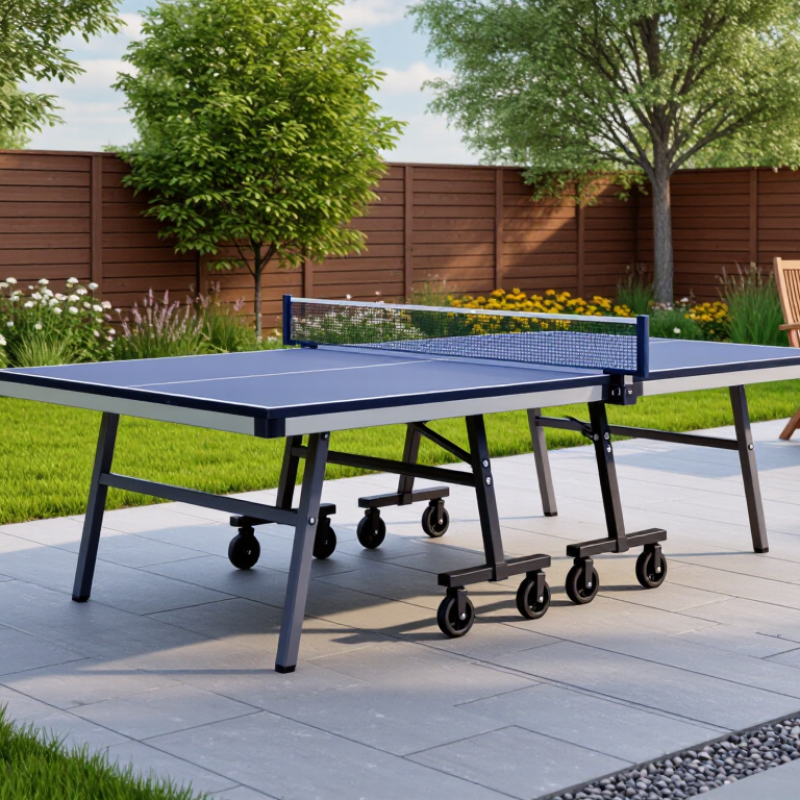
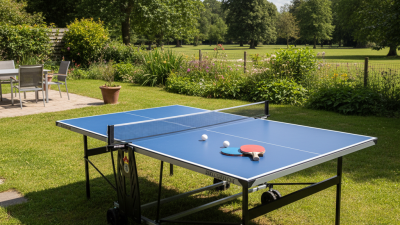
Before choosing an outdoor fold up ping pong table, define how and where you will play. Measure the actual patio, not the space you imagine. A regulation table is about 9 feet long and 5 feet wide. Leave at least 3 feet behind each end for comfortable movement. Wider side clearance helps players reach angled shots. Measure twice. I once measured only the tabletop area. That mistake left chairs and a fence inside the playing zone.
Think about the players, too. Children may need safer corners and simpler storage, while regular doubles games require more side clearance. Check the route to your storage area, including doorways, stairs, and narrow gates. A folded table can still be tall and heavy. Wind changes everything. Choose a level surface, such as concrete or stable paving, because uneven ground can affect the bounce and strain the frame.
Outdoor conditions should shape your requirements. Look for weather-resistant construction, strong locking wheels, adjustable feet, and a secure net system. A fitted cover helps, but it cannot replace dry storage during severe weather. Inspect hinges and locking points before every session. I would also test the table’s folding action in person when possible; smooth movement matters more than impressive product language. My early preference was a lighter table, but it moved during windy rallies. Convenience was not enough.
| Tip | Selection Dimension | Practical Data and Recommended Standard | Why It Matters Outdoors | What to Check Before Buying |
|---|---|---|---|---|
| 1 | Measure the Playing Area | A regulation table is 274 cm long × 152.5 cm wide. Allow at least 60 cm of clearance on each side and about 150 cm behind each end for casual recreational play. More space is preferable for active or competitive play. | Sufficient clearance lets players move safely, retrieve balls, and open both table halves without striking walls, fences, vehicles, or outdoor furniture. | Measure the usable surface, identify permanent obstacles, and confirm that the fully opened table will fit with walkways still accessible. |
| 2 | Confirm Table Size and Playing Height | The internationally recognized playing surface is 274 cm × 152.5 cm, with the tabletop 76 cm above the ground. A regulation net is 15.25 cm high. | Full-size dimensions provide more realistic ball bounce and movement. Smaller tables can be easier to store but change the pace and angles of play. | Compare the listed dimensions with the standard size and verify whether the stated measurements include the frame, wheels, or net posts. |
| 3 | Evaluate the Folded Storage Footprint | Folded dimensions vary by design. Many full-size folding tables are approximately 137–152.5 cm wide and 65–80 cm deep when stored, while their folded height commonly exceeds 150 cm. | A table can fit the playing area yet be difficult to store in a shed, garage, balcony, or narrow utility room. | Measure the storage doorway, ceiling height, turning radius, and available floor space. Include the folded net, locking parts, and wheel clearance. |
| 4 | Choose an Outdoor-Appropriate Top | Look for a weather-resistant tabletop with a sealed surface and a playing thickness commonly around 4–7 mm. The frame and underside should also resist moisture and corrosion. | Outdoor exposure can cause swelling, warping, fading, rust, and inconsistent bounce if water reaches unprotected materials. | Check the care instructions, edge sealing, drainage design, corrosion-resistant hardware, and whether the table must be covered when not in use. |
| 5 | Prioritize Stability and Safety | Select wide, sturdy legs; reliable opening locks; and lockable caster wheels. Each independently folding half should have a positive safety latch to prevent accidental opening or closing. | Uneven patios, wind, and repeated folding place greater demands on the frame. Secure locking systems reduce tipping, pinching, and unwanted movement. | Confirm the wheel-lock mechanism, leg braces, safety latches, level adjusters, and the recommended number of people for setup. |
| 6 | Balance Portability With Durability | Full-size outdoor fold-up tables often weigh approximately 50–80 kg. Larger wheels and integrated handles make this weight easier to move across smooth, firm surfaces. | A lightweight table may be easier to transport but can be less resistant to movement. A heavier frame usually improves stability but requires more storage and lifting capacity. | Compare total weight, wheel diameter, handle position, folded balance, and whether two adults can safely move it over the intended surface. |
| 7 | Match the Table to Weather and Maintenance Conditions | Outdoor tables should be stored dry when possible and protected with a breathable cover. Avoid leaving a folded or unfolded table in standing water, strong wind, snow, or prolonged direct sunlight. | Weather resistance improves longevity but does not make a table permanently waterproof or immune to ultraviolet exposure, freezing temperatures, or wind damage. | Review the recommended storage conditions, cover requirements, cleaning method, replacement-part availability, and warranty coverage for outdoor use. |
Note: Dimensions and weight ranges are practical benchmarks for full-size outdoor folding tables. Actual specifications vary by construction and model, so verify the product specification sheet before purchase.