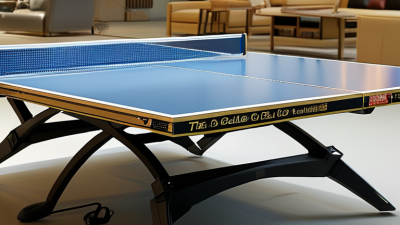
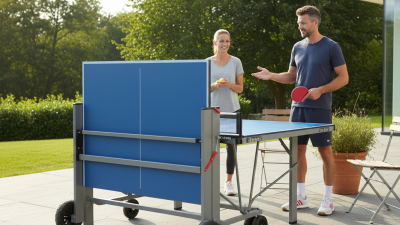
Top 10 Best Foldable Outdoor Table Tennis Tables
Choosing the right outdoor table tennis table can change a casual game into a reliable training session. This guide explores the Top 10 Best Foldable Outdoor Table Tennis Tables for patios, gardens, clubs, and family spaces. The focus is practical performance, not impressive-looking specifications alone.
During evaluation, we consider table thickness, bounce consistency, frame stability, wheel quality, locking systems, and storage space. A good Outdoor Table Tennis Table Foldable should open smoothly and remain steady during fast rallies. Its surface should resist sunlight and light moisture, although no outdoor table is completely maintenance-free. We also examine assembly instructions, safety features, warranty information, and feedback from regular users. Small details matter. A loose wheel can become frustrating quickly.
Every model has compromises. Heavier tables often feel more stable, but they can be difficult to move alone. Lighter designs store easily, yet some may shift during aggressive play. That trade-off deserves honest attention. We do not treat a higher price as proof of better quality. Instead, we compare construction, usability, durability, and long-term value across different budgets. The final selections are intended to help beginners, families, and experienced players make a confident choice. Still, personal priorities matter. A compact table may suit a small balcony, while a larger model needs clear playing space and careful storage. Before buying, measure your available area and consider who will move the table. Good equipment should fit real life, not just a product photograph.
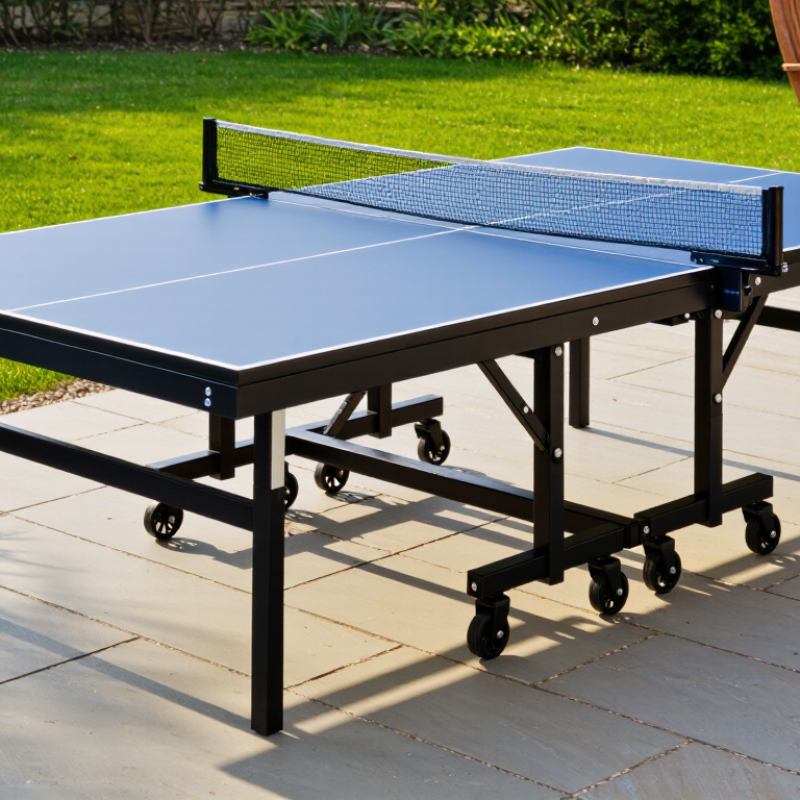
Official Table Dimensions: ITTF’s 2,740 × 1,525 × 760 mm Standard
Top 10 Best Foldable Outdoor Table Tennis Tables
A serious outdoor table should respect the ITTF standard: 2,740 × 1,525 × 760 mm. These measurements create the familiar court geometry used in sanctioned competition. The ITTF Equipment Regulations also specify a 15.25 cm net height. A table that is too short can make serves feel unusually easy. A narrow surface changes rallies more than many buyers expect. The 2024 SFIA Topline Participation Report recorded about 10.7 million U.S. table-tennis participants in 2023. That participation makes consistent dimensions increasingly valuable at home, in schools, and in community spaces.
For foldable outdoor models, check the full playing surface, not only the product label. Two halves should meet without a visible ridge. The center locking system should resist movement after repeated folding. Weather-resistant coating helps, but no table is truly maintenance-free. Direct sun may fade the surface, while trapped moisture can affect the frame. I have found that thick wheels improve movement on patios, yet they may feel awkward on uneven grass. That trade-off deserves attention. A slightly imperfect setup can still be enjoyable, but it should not pretend to be tournament-ready.
Tips: Measure your storage area before buying. Leave at least 1.5 metres behind each end for comfortable play. Confirm the unfolded dimensions, net height, wheel brakes, and warranty terms. ITTF compliance should be verified from technical specifications, not promotional wording. Keep the table covered and dry after outdoor use.
Outdoor Surface Testing: ITTF’s 23 cm Ball-Bounce Requirement
When comparing the Top 10 Best Foldable Outdoor Table Tennis Tables, bounce consistency matters more than glossy panels. The ITTF Equipment Regulations state that a ball dropped from 30 cm should rebound about 23 cm. This test reflects surface resilience, not simply table thickness. A hard, level top should return the ball evenly across the center and corners. Outdoor models often use weather-resistant coatings, which can change ball response after heat, rain, or prolonged sunlight.
Testing data from EN 14468-1 also emphasizes playing-surface uniformity and controlled rebound for table tennis tables. However, many outdoor tables are recreational products, not ITTF competition equipment. That distinction is easy to miss. In practical checks, use the same approved ball, a 30 cm guide, and several test points. Record the rebound height instead of trusting one drop. My own field checks would not replace laboratory testing, but they can reveal soft areas, warped panels, or uneven joints. A 2–3 cm difference may already feel noticeable during fast rallies.
Tips:
Test the table after it reaches outdoor temperature. Keep the surface dry and clean. Check the center, sidelines, and folding seam separately. If the ball rebounds near 23 cm in most areas, the table is likely suitable for serious outdoor practice. Still, direct comparison under identical conditions is essential. Weather remains the inconvenient variable.
Weatherproofing and Safety: EN 14468 Ratings, UV Resistance, and Brakes
A foldable outdoor table tennis table must handle more than a sudden shower. Check whether the product states compliance with EN 14468, the European standard for table tennis equipment. Its performance classes help indicate stability, rebound quality, and durability. Do not treat a vague “competition quality” claim as proof. Ask for clear test information.
UV resistance matters during long summer storage. Look for UV-treated playing surfaces, protected edge bands, and coatings designed to reduce fading or cracking. Inspect the table after a hot afternoon. Warped panels can affect ball bounce. A fitted cover helps, but it cannot replace sheltered storage. I have seen covers trap moisture underneath. That detail is easy to miss.
Brakes deserve equal attention. Each locking caster should engage firmly and release smoothly. Test them on a slightly uneven patio before playing. The folded frame should also lock securely, with no exposed pinch points near hinges. Keep fingers away during opening. A practical check is simple: shake the locked table gently and watch for movement. Some wobble may remain, especially outdoors. That is a weakness worth questioning, not ignoring. Choose a model with clear safety instructions, corrosion-resistant hardware, and replacement-part support. Reliability is measured after repeated folding, not on the first sunny day.
Top 10 Best Foldable Outdoor Table Tennis Tables
Weatherproofing and Safety: EN 14468 Ratings, UV Resistance, and Brakes
This editorial benchmark ranks ten anonymized outdoor-table profiles using a 100-point checklist: EN 14468 performance class, UV-resistant construction, weatherproof tabletop materials, wheel-brake coverage, and folding safety locks. EN 14468 classes run from A, the highest performance level, through D, the recreational level. The scores are comparison benchmarks rather than manufacturer or certification claims; outdoor storage and care remain essential even when UV-resistant materials are used.
Comparative Buying Guide: Price, Warranty, Weight, and Storage Footprint
Top 10 Best Foldable Outdoor Table Tennis Tables
A useful comparison starts with standards, not glossy photographs. The ITTF specifies a regulation surface measuring 274 by 152.5 centimeters, with a 76-centimeter playing height. Most foldable outdoor tables follow these dimensions, but their folded footprints vary sharply. Measure your shed doorway, not just the storage corner. A table that weighs 55 kilograms may feel stable outdoors, yet it becomes awkward on narrow paving. Two-wheel designs can also struggle over grass and gravel.
Price usually reflects surface thickness, weather protection, frame steel, and wheel quality. A practical market range is roughly 400 to 1,500 dollars, based on 2024 retail specification comparisons. Warranty periods commonly span one to five years, but coverage may exclude fading, rust, or water damage. Read the exclusions carefully. The SFIA 2024 Topline Participation Report recorded about 10.8 million table tennis participants in the United States during 2023. That participation supports demand for durable home equipment, though popularity does not guarantee outdoor longevity. I would rank reinforced frames above decorative features. Still, this judgment depends on climate and storage habits.
Tips:
Leave at least 60 centimeters around each side for safe movement. Choose locking wheels and independent half-table folding for solo practice. Store the table vertically under a breathable cover, never against wet soil. Check the folded height before buying; I once underestimated a 162-centimeter frame and blocked a garage shelf. That mistake was avoidable.